Interested in launching a new project that aims to develop future leaders, with a public service orientation? Seed money is available from a unique fund at the law school -- and all members of the Stanford community can apply.
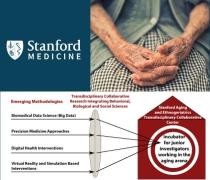
This mentored research program seeks to (1) enhance aging research using emerging methodologies, (2) foster research on minority populations, (3) and increase the involvement of underrepresented minority scientists in aging research.
Limited program - $875K Funding opportunity for faculty with PI eligibility within the first three years of their faculty careers. An internal selection process is required. This site is collecting School of Medicine internal proposals only.
Limited program - $75K-$100K Gift funding opportunity for the School of Medicine Assistant Professors (with MCL, UTL, NTLR appointments.) early in their careers. An internal selection process is required.
The KL2 Mentored Career Development Program (KL2 Scholars Program) at Stanford University is a two-year research program funded by the National Institutes of Health (NIH) and the Stanford Clinical Translational Science Award (CTSA) Program.
The Stanford Clinical Translational Science Award (CTSA) SPADA Pilot Program funds projects with a goal of diagnosing and/or predicting the onset, course, worsening, or complications of disease, and prolonging health.
The France-Stanford Center seeks to fund conferences and workshops. Conferences should address significant issues of common interest to scholars from France and Stanford.
The France-Stanford Center sponsors high quality collaborative research projects likely to foster new linkages and deepen existing connections between French scholars and students and their counterparts at Stanford University.
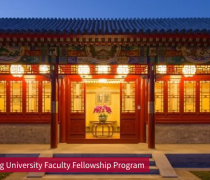
SCPKU offers Stanford faculty from any school or discipline an opportunity to lead a three-week graduate seminar in Beijing. Faculty decide the topic and make the final selection of student participants.
The Stanford Center at Peking University (SCPKU) offers fellowships to Stanford faculty engaged in research in China, or who want to explore new opportunities or collaborations.
The King Center invites proposals from Stanford faculty for ambitious new initiatives harnessing and developing the university’s distinctive strengths in research on global development and poverty.
SCI’s mission is to translate Stanford discoveries into individualized cancer care and prevention. In keeping with its goal of educating and empowering the next generation of cancer researchers, SCI offers funding to cancer research fellows.
Collaborative projects with a hardware aspect related to enabling technology or devices for sensing, interfaces or flexible/stretchable electronics, worn or carried, or implanted in the body, or for uses in robotics, vehicles or structures.
SCI offers Innovation Awards to support projects focused on the acceleration of basic, translational, clinical and population-based cancer research, and projects focused on types of cancer, such as pancreatic, breast and gynecologic cancers.
The Neuroscience:Translate program supports translational research addressing unmet needs in any area of neuroscience. Resulting technologies and therapies are intended to lead to licensing exits from the university to eventually reach the patient