SCI offers Innovation Awards to support projects focused on the acceleration of basic, translational, clinical and population-based cancer research, and projects focused on types of cancer, such as pancreatic, breast and gynecologic cancers.
The Neuroscience:Translate program supports translational research addressing unmet needs in any area of neuroscience. Resulting technologies and therapies are intended to lead to licensing exits from the university to eventually reach the patient
Our overall aim is to advance understanding of the molecular basis for optimal fetal – infant growth and placental function. Application of new tools, analytics and imaging technologies could provide novel insights to unsolved problems in MNCH.
Our overall aim is to advance the systems immunology tool box to address global health questions using innovative technologies, novel analytical tools and by learning novel basic immunology.
To encourage and foster collaboration toward solutions for global health challenges, we are opening an opportunity for collaborative pilot awards between Stanford University and the Ragon Institute.
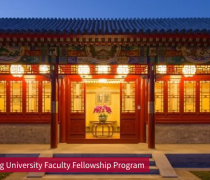
SCPKU offers Stanford faculty from any school or discipline an opportunity to lead a three-week graduate seminar in Beijing. Faculty decide the topic and make the final selection of student participants.
SCPKU offers team-based fellowships to Stanford faculty to spark creative, multi-disciplinary approaches to research in China focused on topics of key interest to Stanford, the U.S., and China.
The Stanford Center at Peking University (SCPKU) offers fellowships to Stanford faculty engaged in research in China, or who want to explore new opportunities or collaborations.